

Has your tenant stopped paying rent, or refused to leave after the tenancy ended? You may be wondering how to evict a tenant in Tamil Nadu without breaking the law yourself. Many general guides talk about other states’ rent laws or ordinary civil suits. Tamil Nadu has its own system: a 2017 tenancy Act, in force since 2019, with a Rent Authority, Rent Court and Rent Tribunal. This guide is for landlords. It explains the first steps and the grounds for eviction. It also covers how the process generally works, compensation for overstaying, and what you must never do.
First steps: talk, then a written notice
Most rent problems start small. A job loss, an illness or a quarrel over repairs can lead to missed payments. Start calmly.
- Talk and listen. Ask what has happened and whether a short payment plan is realistic.
- Put any arrangement in writing. Note dates and amounts, and have both sides sign.
- Send a written notice if it fails. State the arrears or breach, the clause involved, a reasonable deadline, and that you may approach the Rent Court.
- Use a traceable method. Registered post or courier with acknowledgement, plus a copy by email or WhatsApp.
- Keep a file. Agreement, tenancy registration number, rent ledger, bank statements, messages and notices.
If the tenancy has already ended, the notice should mention the end date and ask for vacant possession by a set date. An advocate can draft it to fit the Act and your agreement.
Grounds for eviction under the Act
Under the Tamil Nadu Regulation of Rights and Responsibilities of Landlords and Tenants Act, 2017, a tenant can be evicted only through the Rent Court, on grounds listed in the Act. Examples include:
- not paying rent for two consecutive months;
- sub-letting all or part of the premises without the landlord’s written consent;
- misusing the premises;
- causing damage to the property;
- the landlord’s bona fide (genuine) need for the premises, as set out in the Act.
The full list and its conditions are in the text of the Act. The exact wording matters, so ask an advocate which ground fits your facts before you file.
Why an unregistered agreement hurts you
The Act requires every tenancy to be in a written agreement, and the landlord and tenant must inform the Rent Authority. The Rules require this within 90 days, after which a tenancy registration number is issued. Skipping this step can hurt you:
- You may struggle to prove the agreed rent, deposit, term and notice period.
- The tenant can dispute what was agreed, and it becomes your word against theirs.
- Questions may arise about which forum can hear your case, which costs time.
- You lose a simple official record that the Rent Court can rely on.
If your tenancy is not registered, check the Tamil Nadu tenancy portal for the current procedure and speak to an advocate. Our guide to registering a rent agreement with the Rent Authority explains the steps.
Approaching the Rent Authority and Rent Court
The Act sets up three levels for tenancy disputes. Broadly, the Rent Authority deals with tenancy registration and certain disputes. The Rent Court hears matters such as eviction. The Rent Tribunal hears appeals.
A typical route looks like this:
- Gather your documents: agreement, registration number, rent records, notices and photographs.
- Consult an advocate who handles tenancy matters.
- Your advocate files an application before the Rent Court that covers the property, on the relevant ground.
- The tenant receives notice and gets a chance to respond.
- The Rent Court decides, and its order is carried out through lawful means.
- Either side may appeal to the Rent Tribunal.
Timelines vary with each case, so do not plan around a fixed date. For rent arrears recovery, ask your advocate how unpaid and ongoing rent will be handled while the case runs.
Compensation when a tenant overstays
When a tenancy ends, by expiry of its term or by proper notice, the tenant must hand back possession. If they stay on, the Act allows higher compensation (starting at double the rent) for a tenant who overstays, and it increases the longer they stay.
This is a strong deterrent, but you claim it through the Rent Court, not by deducting what you like. Keep a clear record of the end date, your notice and the tenant’s replies. At move-out, the advance is refunded after lawful deductions. Our guide to rent advance refunds explains what counts.
What not to do
However frustrated you feel, self-help can backfire. Landlords must not cut water or electricity or lock a tenant out; the Act does not allow it. Such steps can also weaken your own case.
| Do not | Do this instead |
|---|---|
| Change the locks or lock the tenant out | Apply to the Rent Court for an eviction order |
| Cut water, electricity or other essential supplies | Keep supplies running and record the arrears |
| Remove the tenant’s belongings | Wait for a lawful order and its execution |
| Walk in without warning | Give at least 24 hours’ written notice, between 7 am and 8 pm as the Act mentions |
| Threaten or send people to pressure the tenant | Communicate in writing and through your advocate |
| Keep the whole advance as a penalty | Make only lawful deductions and show the working |
| Rely on verbal promises | Put payment plans and settlements in writing |
Clauses that prevent disputes
The best eviction is the one you never need. When you draft your next agreement, include:
- rent amount, due date and payment by bank transfer;
- the advance, within the three-month cap for residential homes, and the deductions allowed at move-out;
- the term, renewal and notice period for both sides;
- rent revision terms, with the three months’ written notice the Act requires;
- who handles structural and minor repairs;
- no sub-letting without written consent;
- permitted use and number of occupants;
- handover condition, with an inventory and dated photos.
Then register it with the Rent Authority. For the wider picture, read our summary of landlord and tenant rights under the Act.
Frequently asked questions
Can I evict a tenant without going to court?
Not by force. Under the Act, eviction is only through the Rent Court. A tenant can still leave voluntarily, and a signed settlement with a handover date and a deposit settlement is fine. If the tenant will not agree, apply to the Rent Court through an advocate rather than using pressure.
How many months of unpaid rent before I can apply?
The Act lists not paying rent for two consecutive months as one example of a ground for eviction. The exact conditions matter, so have an advocate check your case. Meanwhile, keep a clear rent ledger and send written reminders, so your records are ready if you need to file.
My agreement was never registered. Can I still act?
Speak to an advocate first, because an unregistered tenancy can raise questions about proof and the correct forum. Check the tenancy portal for the current procedure for registering a tenancy. Whatever happens, do not turn to lockouts or cutting supplies, which the Act does not allow.
Can I cut the power if my tenant does not pay the EB bill?
No. Landlords must not cut water or electricity. Record the unpaid bills and include them in your written notice. Depending on your agreement, unpaid dues may be a lawful deduction from the advance at move-out. You can also raise them through the proper forum with an advocate’s help.
How long does the Rent Court process take?
There is no fixed timeline. It depends on the case, the documents and how both sides respond. A registered agreement, a clear rent ledger and properly served notices usually make a case simpler to present. Ask your advocate for a realistic estimate once they have seen your papers.
Next steps
Gather your agreement, registration number, rent ledger and notice copies, then speak to an advocate who handles Rent Court matters. For future lettings, our guide to renting out your house covers screening and agreements. When the home is vacant, you can list it for free on OWNZAA and talk to tenants directly.
This guide is general information, not legal or tax advice. Rules and fees change — confirm current details on the official portals linked above or with a qualified advocate/chartered accountant before you act. Information checked: September 2026.
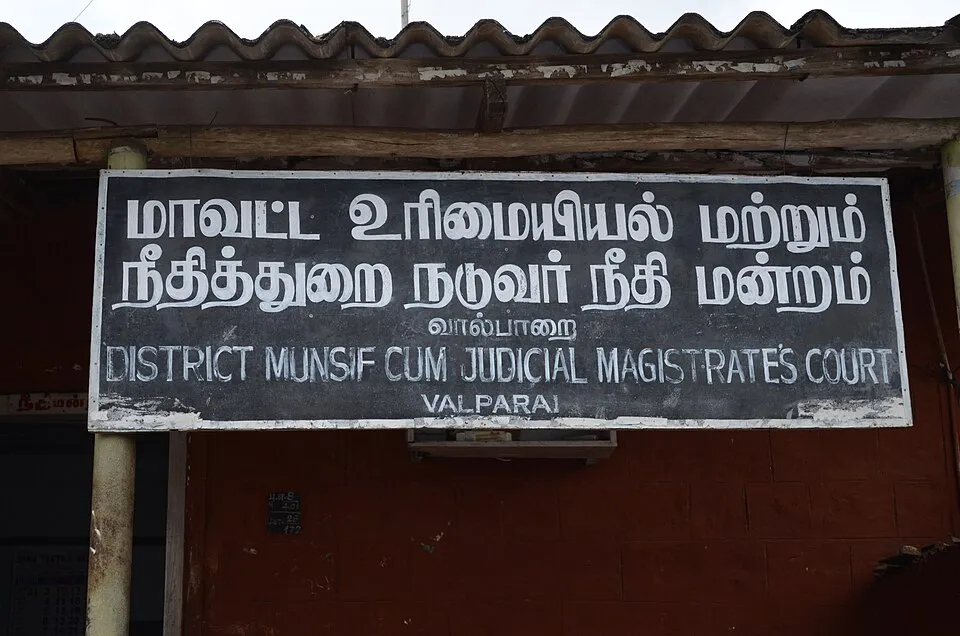
Image credits: top photo — Chennai High Court by Yoga Balaji, CC BY 3.0, via Wikimedia Commons (resized); in-article photo — Valparai town court building JEG4886 by PJeganathan, CC BY-SA 4.0, via Wikimedia Commons (resized).
Ready to find your next property?
Browse verified listings for sale and rent across South India, or post your own property — your first listing is free.