The paperwork is not over after buying property in Tamil Nadu, even once the sale deed is signed and registered. A registered sale deed makes the property legally yours, but the patta, property tax, electricity and water records still show the seller’s name until you update them. Many first-time buyers relax at this point and pay for it years later when they try to sell or take a loan.
This guide is for new owners who have just registered a house, flat or plot. It picks up where the pre-purchase checks end and walks through every record you must move into your name. You will learn what to collect, how to read the updated EC, when patta changes on its own, and how to shift tax, EB and water into your name. A printable checklist follows near the end.
Table of Contents
Why the job is not done after buying property in Tamil Nadu
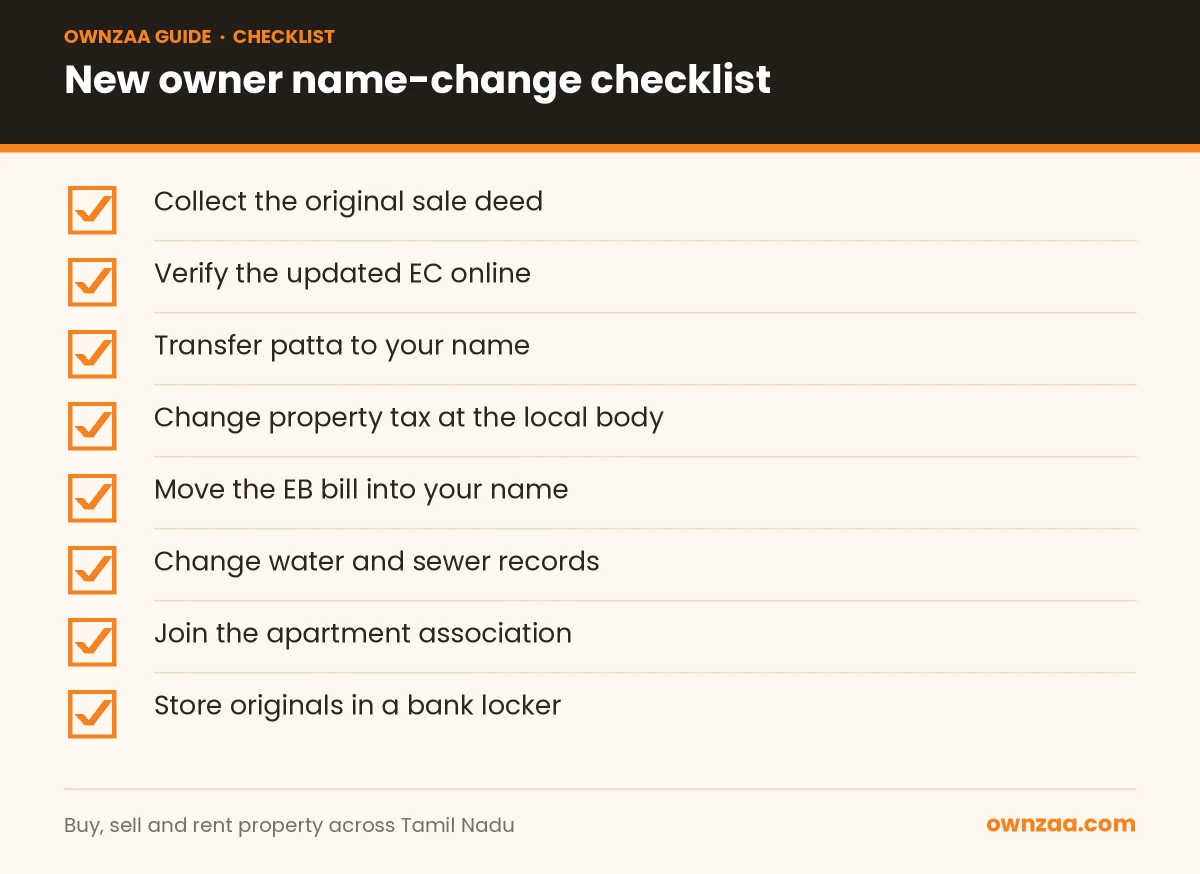
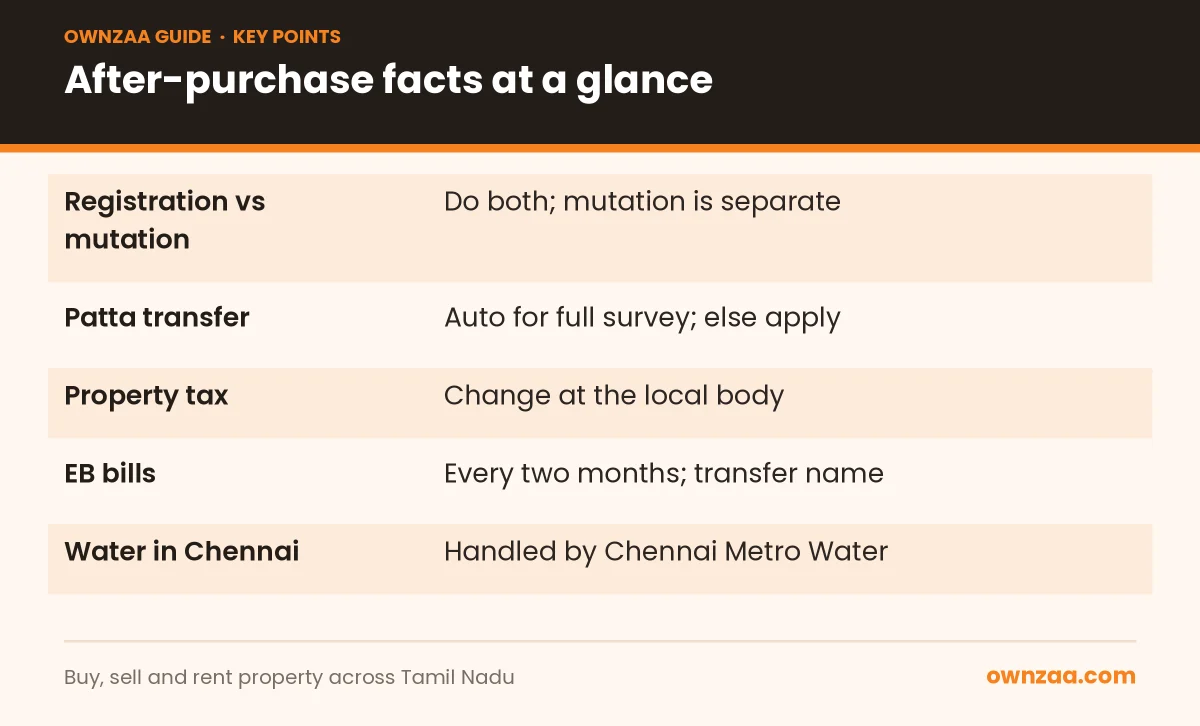
Registration and mutation are two different things. Registration records the sale at the Sub-Registrar office. Mutation is the separate act of updating each government and utility record to your name. Skipping mutation is the most common mistake new owners make after buying property in Tamil Nadu.
Until the records match, you may still get the seller’s tax bills, struggle to prove ownership, and face delays when you sell or mortgage. None of these tasks is hard on its own. The trick is to start them together in the first few weeks, while the seller is still reachable and the paperwork is fresh.
Collect your documents and check the updated EC
The Sub-Registrar office returns the original registered sale deed after registration, often on the same day. If it is not handed over at once, ask when you can collect it. Then gather everything you will need after buying property in Tamil Nadu into one folder.
- The original registered sale deed and the receipts for stamp duty and fees.
- Parent documents, meaning the earlier title deeds handed over by the seller.
- The seller’s latest paid property tax, EB and water receipts.
- For flats: the builder’s completion certificate, possession letter and allotment papers.
Next, view the EC (Encumbrance Certificate, the record of transactions on a property) online on TNREGINET, the state registration portal. It should now list your purchase. If it does not appear after a few weeks, ask the Sub-Registrar office. Also check that your name, the survey number and the extent are recorded correctly. For a deeper walk-through, see our guide to reading your encumbrance certificate online. A single wrong digit here can stall every step that follows, so read it slowly and cross-check it against your sale deed word by word.
Papers to get from the seller at handover
The smoothest name changes happen when the seller hands over a complete set of papers on registration day. Chasing a seller weeks after buying property in Tamil Nadu is much harder, so collect these before you both leave the office.
- All parent documents and the previous owners’ chain of deeds.
- The latest paid property tax, EB and water receipts, marked fully paid.
- A no-dues letter from the apartment association, if it is a flat.
- The approved layout or building plan and the survey sketch, for a plot or house.
- Society share certificate or allotment letter, where these exist.
- Two passport photos and a copy of the seller’s ID for the forms ahead.
Keep the seller’s phone number and a friendly line of contact for a few months. Small clarifications always come up, and a cooperative seller can save you a second trip to an office. If the seller used a power of attorney, take a copy of that too, along with the identity proof of the person who signed.
Patta transfer after buying property in Tamil Nadu
Patta (the land revenue record) shows who holds the land in revenue records. Banks and future buyers will expect it in your name, so this is the record to chase first after buying property in Tamil Nadu.
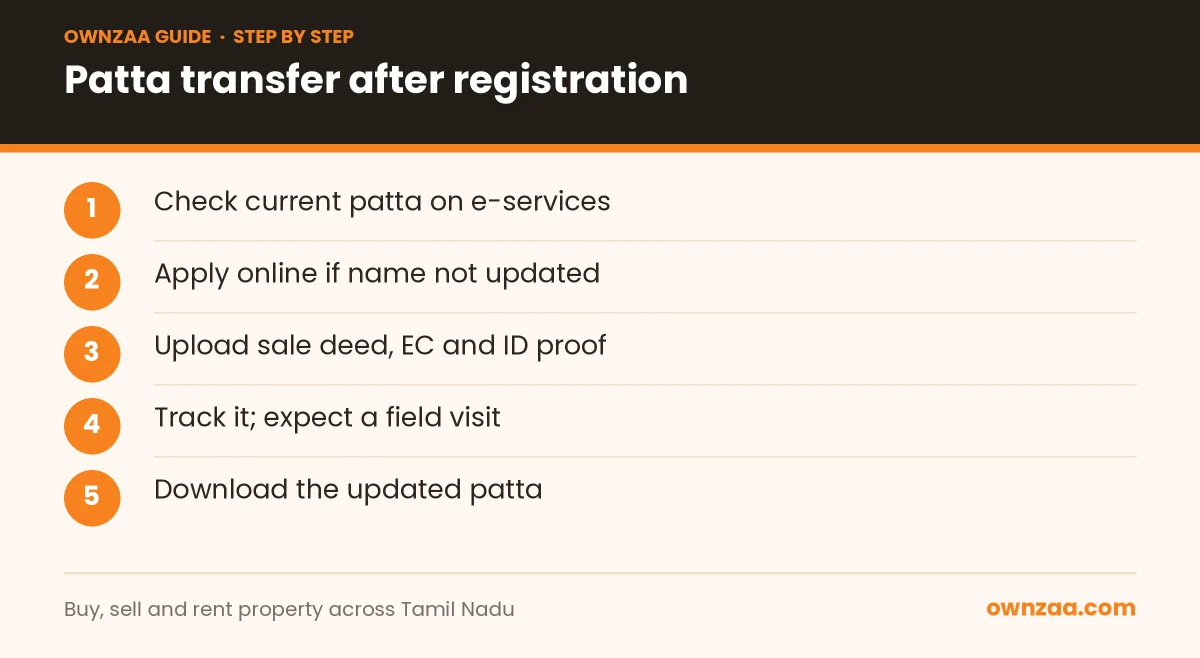
When a registered sale covers a whole survey number with no subdivision, patta transfer is often processed automatically after registration. If you bought part of a survey number, such as one plot in a layout, a subdivision is needed and you usually have to apply.
- Check the current patta on the Tamil Nadu e-services land records portal using your district, taluk, village and survey number.
- If your name has not appeared, or a subdivision is needed, apply through the state’s online patta transfer service.
- Keep scanned copies of your sale deed, EC and ID proof ready to upload.
- Track the application online, as revenue officials may visit to measure the land.
- Once approved, download and save the updated patta in your records folder.
For flats, the land is usually held as an undivided share (UDS), so patta works differently. Read more on undivided share in flats, and ask your advocate how patta is recorded for your building. You can also learn the difference between patta, chitta and adangal before you apply.
Property tax name change
Property tax is collected by the local body. In Chennai that is the Greater Chennai Corporation; elsewhere it is the respective corporation, municipality or panchayat. Apply to change the assessment to your name soon after buying property in Tamil Nadu.
Some local bodies accept applications online; others need a visit to the ward or zonal office. You will usually need these papers.
- A copy of the registered sale deed.
- The latest paid property tax receipt.
- Your ID and address proof.
Clear any arrears first. Ask the seller for the latest receipt before registration, because unpaid tax is usually linked to the property, not just the person who owned it.
EB and water connections
EB (electricity) name transfer
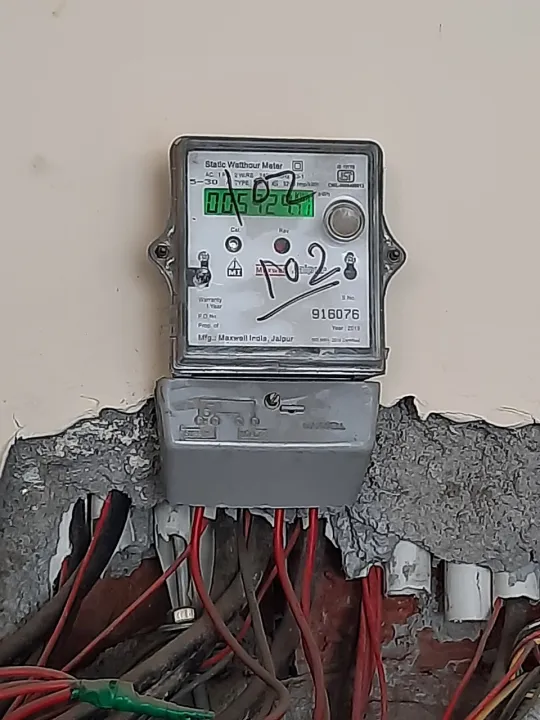
Electricity connections are handled by the state electricity distribution company. You can usually request a name transfer through its online service or at the local section office. Keep the service connection number handy.
Documents usually requested include a copy of the sale deed, the latest paid EB bill and your ID proof. Some offices also ask for a signed declaration, so confirm the current list first. Domestic bills come every two months, so check the first bill in your name carefully.
Water and sewer connection
In Chennai, water and sewer connections are handled by Chennai Metro Water. In most other towns, the local corporation, municipality or panchayat handles them. Apply for a name change with a copy of the sale deed and the latest paid receipt.
If the home depends on a borewell or lorry water, note it down. In apartments, water charges are often collected through the association.
Apartment association and maintenance records
If you bought a flat, register with the owners’ association early so you hear about meetings, repairs and dues. This is easy to forget after buying property in Tamil Nadu, but it protects you from surprise bills.
- Share a copy of your sale deed and your contact details.
- Ask for a no-dues letter showing the seller’s maintenance was paid up to handover.
- Confirm the monthly maintenance, due date and payment method.
- Check how the corpus fund, a common reserve for major repairs, is recorded.
- Collect parking allotment details, access cards and a copy of the bye-laws.
For a new flat, ask the builder when the association will be formed and who handles maintenance until then. Our guide on apartment maintenance charges explains who pays what.
Home insurance and safe storage of documents
Home insurance protects the structure against risks such as fire and flood. If you have a home loan, your lender may already require property insurance. Check what it covers, including contents, and compare a few policies before you renew blindly. A separate contents cover for furniture and appliances is worth pricing, especially in flood-prone parts of the state.
Store your papers with care, because every future sale depends on them.
- Keep originals in a safe place, such as a bank locker.
- Save scanned copies in two places, for example cloud storage and a pen drive.
- If you have a loan, the bank usually keeps the original title deeds. Get a signed list of every document it holds, and collect them all when you close the loan.
The right order and timeline to follow
There is no single legal timeline, but the tasks have a natural order. Doing them in sequence after buying property in Tamil Nadu saves repeat trips and missing-document delays.
| When | Task | Why now |
|---|---|---|
| Week 1 | Collect original deed, check the EC | Confirms the sale is recorded correctly |
| Weeks 1-2 | Start patta transfer or subdivision | Longest step; field visits take time |
| Weeks 2-3 | Property tax, EB and water name change | Stops the seller’s bills reaching you |
| Weeks 3-4 | Association, insurance, safe storage | Closes the loop and protects the asset |
Start every application early and keep the acknowledgement numbers. Follow up online instead of waiting for letters, which rarely arrive on time.
Common mistakes to avoid after registration
Most trouble comes from small things left undone. These are the errors that surface years later, usually at the worst time, such as during a resale.
| Mistake | What it leads to | Better approach |
|---|---|---|
| Never applying for patta transfer | Loan and resale delays later | Apply in the first two weeks |
| Ignoring the seller’s arrears | Dues attach to the property | Collect paid receipts before registration |
| Not checking the updated EC | Errors in name or survey number | View the EC online and verify details |
| Losing original documents | Costly duplicate procedures | Locker plus two scanned copies |
| Skipping association records | Surprise maintenance and fund claims | Get a no-dues letter at handover |
Special cases: flats, plots, inherited and NRI buys
The core steps are the same, but a few situations need extra care after buying property in Tamil Nadu. Know which one is yours before you start.
- Flats: Land is held as an undivided share, so patta and tax records follow the building’s structure. Confirm the completion certificate is in order.
- Plots in a layout: A subdivision and fresh patta are almost always needed. Keep the approved layout and survey sketch handy.
- Inherited then bought share: If co-owners sold you their share, the revenue record must reflect every seller. Ask your advocate to check the chain.
- NRI purchase: Banking and tax steps differ, and a power of attorney may be involved. Plan for a longer timeline and take a CA’s help.
When any document looks unusual, pause and ask an advocate before you file. A small correction now is far cheaper than a dispute later.
Small fees and costs to expect
None of these steps is expensive, but they are not free either. Budget a little for the odd application fee, copies and travel after buying property in Tamil Nadu.
- Patta subdivision and measurement charges, where a subdivision is needed.
- Small application or portal fees for tax, EB and water name changes.
- Copying, notary and courier costs for certified documents.
- Home insurance premium, if you choose to insure the structure.
Fees change, so confirm the current amount on each official portal or office before you pay. Never hand over cash without a receipt.
After-purchase checklist
Use this table to track each task. The documents listed are what offices usually ask for; confirm the current list before you go.
| Task | Where | Documents usually needed |
|---|---|---|
| Collect original sale deed | Sub-Registrar office | Registration receipt, ID proof |
| Check updated EC | TNREGINET (online) | Document number, survey details |
| Patta transfer | E-services portal to check; online service to apply | Sale deed, EC, ID proof |
| Property tax name change | Local body | Sale deed, latest tax receipt, ID proof |
| EB name transfer | State electricity distribution company | Sale deed, latest EB bill, ID proof |
| Water and sewer name change | Chennai Metro Water or local body | Sale deed, latest water receipt, ID proof |
| Association registration | Owners’ association | Sale deed copy, seller’s no-dues letter |
| Home insurance | Insurer or lender | Sale deed, property details |
| Safe storage | Bank locker, scanned copies | All originals and receipts |
Frequently asked questions
Does patta change automatically after buying property in Tamil Nadu?
Often, but not always. When the sale covers a whole survey number with no subdivision, patta transfer is often processed automatically. If you bought part of a survey number, a subdivision is needed and you usually have to apply online. Either way, check the patta status on the e-services portal rather than assuming it has changed.
How long does the whole process take?
There is no single timeline. Automatic patta updates, online tax changes and EB transfers can move quickly, while subdivisions and field visits take longer. Start every application in the first few weeks. Keep acknowledgement numbers and follow up regularly instead of waiting for letters to arrive.
What if the seller left unpaid tax or EB dues?
Local bodies and the electricity company usually expect arrears to be cleared before a name transfer. Ideally, collect paid receipts from the seller before registration. If you find dues afterwards, raise them with the seller in writing and speak to your advocate about your sale agreement.
Do I need a new EB connection or only a name transfer?
Usually just a name transfer. The existing service connection simply moves into your name. A new connection is needed only when there is none, or when you create a separate portion. Also check that the tariff category matches how you use the property, such as domestic use for a home.
What if the EC or deed shows a mistake in my name or survey number?
Fix it early, before you apply for patta or a loan top-up. Small errors can hold up every later step and cause trouble when you sell. Contact the Sub-Registrar office and your advocate. Depending on the error, a correction document may need to be registered.
Is mutation the same as registration?
No. Registration records the sale at the Sub-Registrar office and makes the property yours. Mutation is the separate updating of revenue, tax and utility records into your name. You must do both. Registration happens on the day of sale; mutation is the follow-up work you handle in the weeks after buying property in Tamil Nadu.
Next steps
Still deciding on a property? Browse properties for sale across Tamil Nadu and plan your budget with our cost of buying a home in Tamil Nadu worksheet. If you are buying in the capital, our Chennai property page is a good place to compare homes.
Planning to rent out your new home? Read about landlord and tenant rights under the Tamil Nadu Tenancy Act, revisit the checks to make before buying a property, then post your property free on OWNZAA. Tenants and buyers contact you directly by call or WhatsApp, and OWNZAA takes no commission on the deal.
This guide is general information, not legal or tax advice. Rules and fees change — confirm current details on the official portals linked above or with a qualified advocate/chartered accountant before you act. Information checked: September 2026.
Image credits: top photo — Tamil Nadu Merchant House by Mohan Babu V, CC BY-SA 4.0, via Wikimedia Commons (resized); in-article photo — Electricity meter in India by GautamSudhanshu, CC BY-SA 4.0, via Wikimedia Commons (resized).
Ready to find your next property?
Browse verified listings for sale and rent across South India, or post your own property — your first listing is free.