

The question of lease vs rent in Tamil Nadu comes up the moment you start looking for a home, because the same listing site shows two very different offers. One is an ordinary rental with a fixed monthly rent. The other follows a local custom where you pay one large, refundable lump sum and then pay little or no rent every month. That second system is usually called “lease” or otti (a lump-sum lease).
This honest guide walks you through lease vs rent in Tamil Nadu for both tenants and owners. You will learn what each word really means here, how the two compare on money and risk, how a lease amount is fixed, and the exact steps to protect a big sum before you hand it over. The aim is simple: help you pick the option that fits your savings and your peace of mind.
Table of Contents
Table of Contents
What “lease” actually means in Tamil Nadu
In everyday Tamil Nadu speech, “lease” rarely means a plain long rental. It usually means a lump-sum arrangement. The tenant pays the owner a large refundable amount at the start, called the lease amount. In return, the tenant lives in the house for an agreed term and pays little or no monthly rent. When the term ends, the owner returns the full amount and the tenant hands back the keys.
You will also hear it called otti or “otti veedu” (a house given on lease). The owner gets the use of a large sum of money for a few years. The tenant escapes a monthly rent, but gives up the interest or return that money could have earned in a bank or elsewhere. Understanding this trade-off is the heart of the lease vs rent in Tamil Nadu decision.
Plain monthly rent is the system most people know. You pay a security deposit (the “advance”) once, then a fixed rent each month. The advance is refundable after lawful deductions when you leave. No large sum stays locked up for years.
Lease vs rent in Tamil Nadu: the key differences
The clearest way to settle the lease vs rent in Tamil Nadu question is to see the two side by side. The table below sets out where your money goes, who gains, and what can go wrong in each case.
| Point | Lump-sum lease (otti) | Monthly rent |
|---|---|---|
| Upfront payment | One large, refundable lease amount | Security deposit (“advance”), usually smaller |
| Monthly outgo | Little or none | Fixed monthly rent |
| Main gain for the owner | Use of a large sum of money | Steady monthly income |
| Main risk for the tenant | Owner may not repay the lump sum on time | Disputes over deductions at move-out |
| At the end | Owner must repay the whole amount at once | Owner refunds a smaller deposit |
| Money kept free | Locked for the whole term | Stays with you, earns a return |
| Bills and upkeep | As agreed in writing | As agreed in writing |
Notice that the biggest difference is not the roof over your head. It is where a large sum of money sits, and who carries the risk on it. Keep that in mind through the rest of this guide.
How a lease amount is usually decided
There is no official formula for a lease amount. It is negotiated between the owner and the tenant, and both sides usually weigh a few things before agreeing a number:
- The monthly rent the same house would fetch on the open market.
- What the tenant could otherwise earn on the money, for example from a bank fixed deposit.
- What the owner saves or earns by using it, such as by clearing a loan.
- The length of the term, and whether a small monthly payment is also included.
- The condition of the house, its location and the demand in that neighbourhood.
In plain words, both sides compare the rent the tenant avoids with the return the tenant gives up. A fair deal is one where both feel that trade-off is balanced. We do not quote typical amounts, because they vary widely from street to street. The safe way is to compare similar listings in your own locality and negotiate from there.
An illustrative way to think about it
Here is an illustrative example with round numbers, not a real quote. Suppose a house rents for a certain amount a month. Over three years, that adds up to a known total in rent. If an owner instead asks for a lease amount, you can ask yourself: would the return on that lump sum, kept safely elsewhere, have covered a big share of the rent I am avoiding? If yes, the lease may be worth it. If the sum feels too high for the rent it replaces, monthly rent may serve you better.
Lease vs rent in Tamil Nadu: which one suits you?
There is no single winner in lease vs rent in Tamil Nadu. The right choice depends on your savings, your plans and how much risk you can carry. Read the pros and cons for each side before you commit.
For tenants
- Lease suits you if you have a large sum spare, want low monthly costs, and plan to stay put for the full term.
- Rent suits you if you want your money free, may move within a year or two, or cannot lock up a big amount.
- The catch with lease: the sum is idle for years and you depend on the owner to repay it on the exact date.
For owners
- Lease suits you if you need a large sum now, perhaps to close a loan, and can repay it in full later.
- Rent suits you if you want a regular monthly income and do not want a big repayment hanging over you.
- The catch with lease: you get no monthly income, and the whole amount falls due on one date.
If you are still deciding where to live before you even reach this stage, our tenant guides on renting a house in Tamil Nadu and renting a house in Salem walk through the basics of choosing a good home.
The real risks of a lump-sum lease
The biggest risk in a lump-sum lease is simple to state and hard to fix: the owner may not be able to return your money when the term ends. A person can spend the sum, tie it up in another deal, or fall on hard times. Unlike a small deposit, a lease amount is often life savings.
Other risks sit in the paperwork. You might deal with someone who is not the real owner. The house might carry a bank loan or a family dispute. The agreement might be vague about the refund date. Each of these can turn a smart lease into a long headache. That is why the lease vs rent in Tamil Nadu choice must always include a hard look at documents, not just the number.
How to protect a large lease amount
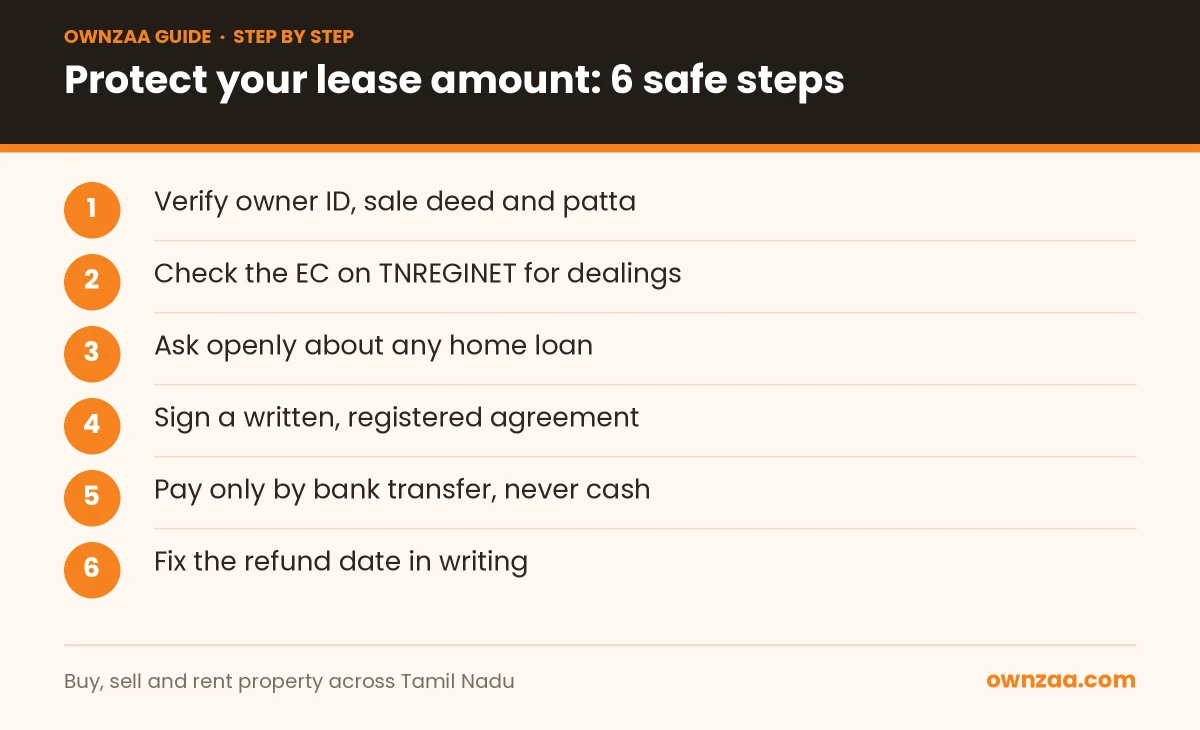
If you decide on a lease, protect the money like it is the biggest cheque you will write this year, because it usually is. Work through these steps in order before you pay a single rupee:
- Verify the owner. Match the owner’s photo ID with the sale deed and the patta (the land revenue record of ownership). Patta details can be viewed on the Tamil Nadu e-services portal.
- Check the EC. An EC (Encumbrance Certificate) from TNREGINET lists registered dealings on the property, such as sales and mortgages. Our guide on documents to check before you commit explains how to read it.
- Ask about loans openly. If the original title papers sit with a bank, there is likely a loan on the house. Ask directly and get the answer in writing.
- Sign a written, registered agreement. Put in the lease amount, the term, the refund date, upkeep duties and what happens if the refund is late. Have an advocate draft or review it.
- Pay only by bank transfer. Never hand over a large sum in cash. Keep the bank record and a signed receipt with the date and amount.
- Fix the refund date in writing. Also write how the refund will be paid, and how much notice each side must give before the end.
These six steps are the safety net that makes a lease worth considering at all. Skip them, and you are trusting a stranger with your savings on a handshake.
Legal points to check with an advocate
A lump-sum lease raises legal questions you should not guess at. Take these to a local advocate before you sign:
- Deposit cap: for residential premises, the Tamil Nadu Tenancy Act 2017 caps the security deposit at three months’ rent. How that cap applies to a lump-sum lease with little or no rent is a question for an advocate, and we do not offer a view on its legal standing.
- Rent Authority: the Act requires every tenancy to be in writing and informed to the Rent Authority. See our guide on how to register a rent agreement with the Rent Authority.
- Sub-Registrar and stamp duty: longer leases are generally registered with the Sub-Registrar. Confirm the registration and stamp duty treatment of a lease amount there or with your advocate.
- Sub-letting and repairs: agree who handles major repairs, and whether you may sub-let, in writing before you move in.
Getting a clear legal opinion is cheap next to the sum at stake. It is one of the few costs in the whole lease vs rent in Tamil Nadu decision that always pays for itself.
Registration and stamp duty in plain words
Two different registrations can apply to a lease, and people often mix them up. The first is the tenancy record with the Rent Authority, which every tenancy needs. The second is registration of a lease deed with the Sub-Registrar, which longer leases generally need and which carries stamp duty.
A registered lease deed gives you far stronger proof of a large payment than a plain paper. If a dispute reaches a court or tribunal, a registered document speaks for itself. Ask the Sub-Registrar’s office or your advocate what stamp duty applies to your term and amount, and confirm the current rate on TNREGINET before you sign.
The tax angle you should not ignore
A lump-sum lease can have tax effects for both sides, and these are easy to overlook when everyone is focused on the number. The owner may face questions about how the amount is treated. The tenant may need records if the money came from a sale or a withdrawal.
Rules here change, and the way an arrangement is taxed depends on the exact wording of the deed. Ask a chartered accountant (CA) how your specific lease is treated before you finalise it. A short paid consultation now can prevent a notice later.
Getting your lump sum back at the end
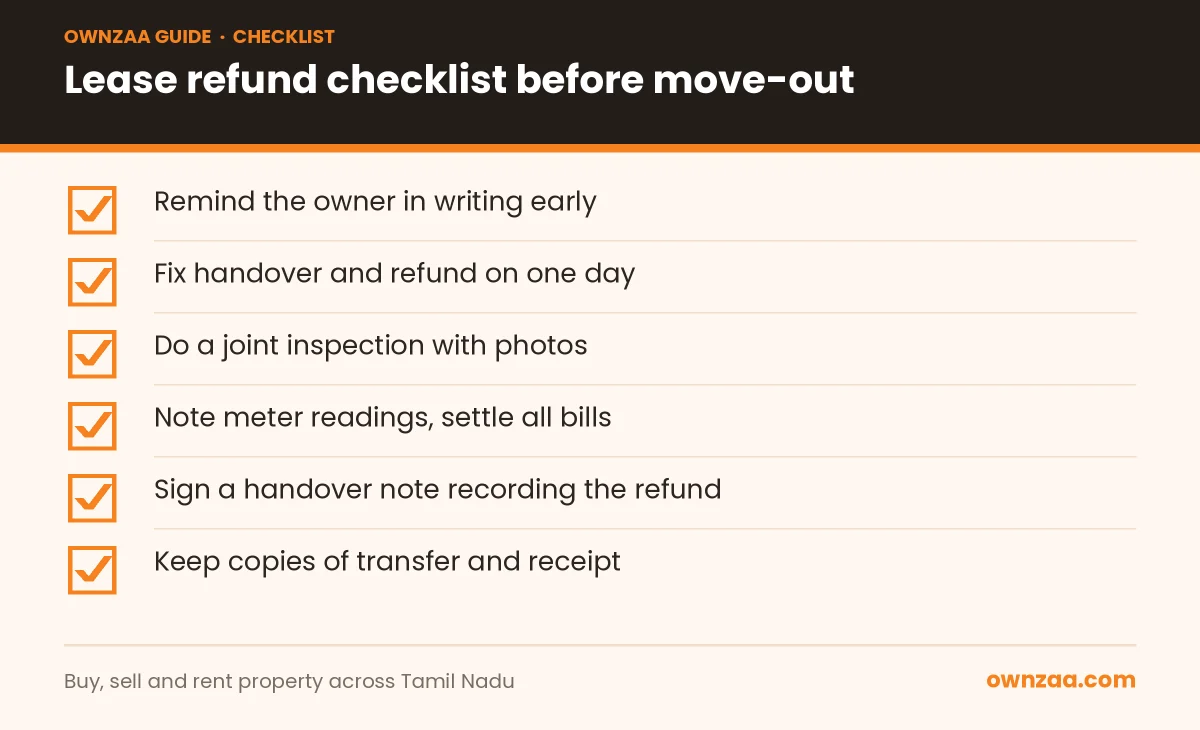
Plan the exit from the first day of the lease, not the last month. A refund of a large sum needs notice and a clear handover. Use this checklist as the term nears its close:
- Remind the owner in writing a few months before the end date.
- Agree the handover date and the refund date together, ideally so the money and the keys change hands on the same day.
- Do a joint inspection with photos, note the meter readings and settle every bill.
- Sign a short handover note that records the refund and the condition of the house.
- Keep copies of the transfer, the receipt and the note for at least a few years.
If the owner delays the refund, send a polite written reminder with your agreement attached, then take legal advice quickly. Many of the move-out steps in our guide to getting your rent advance back apply to a lease refund too.
Common mistakes to avoid
Most lease troubles trace back to a handful of avoidable slips. Watch for these when you weigh lease vs rent in Tamil Nadu:
- Paying before checking papers. The excitement of a good house makes people skip the EC and patta. Never pay first.
- Cash payments. A large cash sum leaves no clean trail and is hard to recover.
- A vague refund clause. “Return at the end” is not enough. Fix the exact date and mode.
- No registration. An unregistered paper is weak proof for a big sum.
- Ignoring loans on the house. A mortgaged house can pull your money into someone else’s dispute.
- Trusting an agent as the owner. Always deal with, and pay, the verified owner.
Avoid these six, and you remove most of the danger that makes people nervous about a lease in the first place.
Key facts at a glance
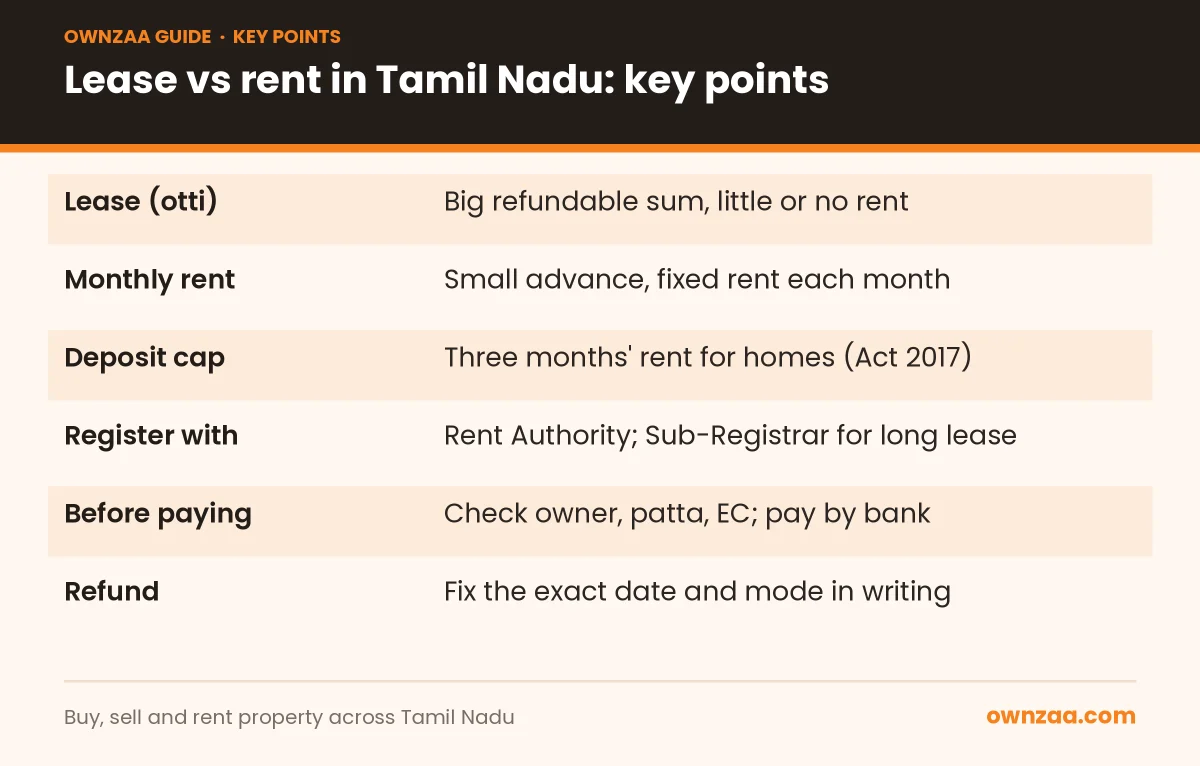
Before the common questions, here is a quick recap of the points that matter most in the lease vs rent in Tamil Nadu choice. Keep it handy when you meet an owner.
Frequently asked questions
Is otti the same as a lease in Tamil Nadu?
In everyday use, yes. Both usually describe an arrangement where the tenant pays a large refundable lump sum and pays little or no monthly rent for an agreed term. In a legal document, though, “lease” can mean any rental agreement. Always read the paper carefully to see exactly what is offered and what is refundable.
Is a lump-sum lease better than monthly rent?
It depends on your situation, which is why lease vs rent in Tamil Nadu has no single answer. A lease can suit a tenant with savings who wants low monthly costs, but it locks up a large sum and carries repayment risk. Monthly rent keeps your money free and your risk smaller. Compare the rent you would save with the return you would give up.
What if the owner cannot repay the lease amount?
This is the main risk, so plan for it before paying. Your agreement should state the refund date and what happens if the refund is late. If the owner still does not pay, send a written reminder and take advice from an advocate on your options, including the forums under the tenancy law. A registered deed makes your claim far stronger.
Should a lease agreement be registered?
The Act requires every tenancy to be informed to the Rent Authority. Longer leases are also generally registered with the Sub-Registrar, and a registered document gives stronger proof of a large payment. Confirm the registration need, the stamp duty and the treatment of the lease amount with the Sub-Registrar or an advocate before you sign.
How do I find a house for lease in Chennai safely?
Search listings, visit in person and deal directly with the owner. Before paying anything, check the owner’s ID, sale deed, patta and EC, and ask about loans. Pay only by bank transfer against a signed, registered agreement. A verified listing badge helps as a trust signal, but it is not a guarantee of title, so do your own checks.
Can the lease amount count as my three-month deposit?
That is exactly the grey area an advocate must clear for you. The three-month deposit cap is written for rent-based tenancies. A lease with little or no rent does not fit neatly, so its legal treatment needs professional advice. Do not assume; ask before you pay.
Next steps
Whichever way you lean in lease vs rent in Tamil Nadu, check the owner and the papers before any money changes hands. Browse homes for rent and lease on OWNZAA, look at properties in Chennai, and speak to owners directly by call or WhatsApp. When you find the right one, our guides for NRIs and other buyers cover the paperwork step by step.
Owners can post a property for free and state clearly whether they offer monthly rent or a lump-sum lease. A plain, honest listing brings you serious tenants faster, and OWNZAA charges no commission on the deal.
This guide is general information, not legal or tax advice. Rules and fees change — confirm current details on the official portals linked above or with a qualified advocate/chartered accountant before you act. Information checked: September 2026.
Image credits: top photo — Church Parsonage, Valayankulan. Tamil Nadu – panoramio by Pastor Sam, CC BY 3.0, via Wikimedia Commons (resized); in-article photo — Kallidaikurichi Agraharam. by Sabari Girisan M, CC BY-SA 3.0, via Wikimedia Commons (resized).
Ready to find your next property?
Browse verified listings for sale and rent across South India, or post your own property — your first listing is free.